Why It’s Harder to Feel Connected When There’s Nowhere to Go Together
Relationships aren’t only built in conversation. They’re built in shared space. And that space is disappearing.
I notice it everywhere now.
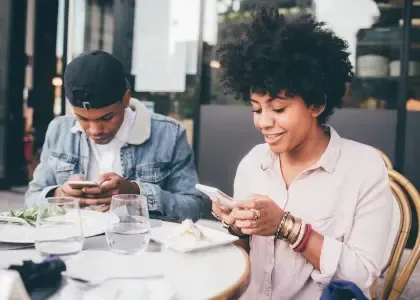
Restaurants, coffee shops, waiting areas, even places that used to feel social in a natural way. People are sitting across from each other, but they’re not really together. One or both of them are on their phones. Not in a dramatic way, not in a way that would make anyone stop and say something’s wrong, but in a way that quietly replaces what used to happen in those spaces.
There’s less eye contact. Less pause. Less of that unstructured time where something could actually unfold between two people.
I’m aware that I’m the outlier in this.
I’m rarely on my phone when I’m out. I tend to look up, to notice who’s around me. If there’s an open seat, I’ll ask if it’s taken and sit down. I still value small talk, even the kind most people try to avoid or move past quickly. There’s something in those moments that has always mattered to me, even before I had language for why.
And what I’ve noticed over time is that people open up to me quickly.
That’s been true for as long as I can remember. People tell me things they haven’t said out loud in years. Not because I’m asking anything particularly deep, and not because they came in planning to share something personal.
It happens because of how I show up in those moments.
I’m there. I’m paying attention. I’m not rushing them, not looking past them, not splitting my attention between them and something else. There’s space, but it’s not just empty space. It’s held.
And people feel that.
I’ve had people say, almost surprised, “I haven’t talked about that in a long time,” or “I don’t usually share this.”
And they mean it.
I see it clearly when I’m at Peekskill Coffee House.
It’s one of the few places left where you can still sit for a bit without being rushed out. And even there, most people are on their laptops or phones. Conversations are quieter, shorter, more contained.
But every once in a while, something different happens.
Someone looks up. There’s a moment of eye contact. A comment gets made. And if you stay in it, even just a little longer than usual, something opens.
Not because anything extraordinary was said.
Because someone stayed present long enough for it to.
That’s what feels different now.
It’s not just that people are on their phones more, although that’s part of it. It’s that there are fewer places where connection can actually happen without effort.
There used to be spaces where you could just be. Coffee shops where you stayed longer than necessary. Places where you weren’t rushed out, where conversation didn’t have a built-in endpoint. You could sit with someone, or even by yourself, and let something unfold without needing to manage it.
Now the structure feels different.
You order, you sit, and almost immediately the check appears on the table. No one says you have to leave, but the message is clear enough. Don’t stay too long. Keep it moving.
It seems small, but it changes something.
Because relationships aren’t only built in direct conversation. They’re built in shared space, in the in-between moments where nothing specific is happening and no one is performing a role. It’s in the pauses, the glances, the small observations that don’t feel important at the time but slowly create a sense of connection.
When that space disappears, something else takes its place.
Distraction usually fills it.
And most people don’t even realize they’re doing it.
Sitting across from each other with nothing to say used to be part of being in a relationship. Now it often feels uncomfortable, almost like something is wrong if the space isn’t filled. So people reach for something to ease that discomfort. Their phone, a quick scroll, anything that keeps them from having to sit inside that moment.
But that moment is where connection either builds or doesn’t.
Not in the big conversations people think they need to have, but in the quiet ones, or even in the absence of conversation, when two people are simply present with each other.
We tend to think of communication as something active, something you do. What you say, how you say it, how well it lands.
But communication also depends on whether there is space for anything to emerge in the first place.
And right now, there is less of that space than there used to be.
When there are no third places, everything becomes more functional.
You’re either at home, where patterns are already established and often hard to shift, or you’re somewhere transactional, where time is limited and the interaction is defined. There isn’t much room in between for something unstructured to happen.
That “in between” used to matter more than people realized.
It was one of the only places where you could interact with people who weren’t part of your immediate circle. Not your family, not your coworkers, not someone there to provide a service. Just people, sharing space without a defined role.
That kind of environment made relationships feel more flexible, more human, less pressured.
Now, much of that has been replaced with efficiency.
Dating apps instead of meeting people. Texting instead of talking. Scrolling instead of sitting. Everything is faster, more direct, and in some ways more controlled.
But something gets lost in that.
I notice it in places that used to feel social in a very specific way.
Hair salons are one of them.
I remember what that looked like when I was younger. My grandmother would go, and it wasn’t just about getting her hair done. It was time spent talking, sitting, being around other women who knew each other. There was a rhythm to it. It wasn’t rushed. It wasn’t quiet. It was a shared space.
That’s not what it feels like now.
Even though the same places exist, the experience is different. It’s louder, more transactional, more contained. People come in, get what they need, and leave. There isn’t really space to sit and talk in the same way, even if you wanted to.
And you can feel the absence of it.
Not dramatically. Just enough to notice that something that used to happen there doesn’t anymore.
So when couples say they want to work on their relationship, what they’re often describing is something harder to name.
They don’t feel as connected as they used to. Conversations don’t go the same way. There’s a sense that something is missing, but it’s not always clear what that is.
And the instinct is to focus on communication. To try to say things better, to find the right words, to have the conversations they think they’re supposed to have.
Oftentimes that helps.
But sometimes what’s underneath it is simpler than that.
There’s nowhere to actually be together in a way that allows anything to unfold.
You can go out to dinner, but the experience moves quickly. There’s an unspoken rhythm to it now. Order, eat, finish, leave. Even if no one says it directly, you can feel the pace of it, especially when the check lands during dinner with a “no rush, whenever you’re ready,” which rarely feels like that.
You can sit across from each other, but the pull to disconnect is constant. Not in a dramatic way. Just enough that it’s always there, sitting in the background, making it easier to step out of the moment than stay in it.
And without realizing it, that starts to change how people experience each other.
It also changes what silence feels like.
There was a time when sitting with someone without talking didn’t mean anything was wrong. It was just part of being together. You could sit there, not saying much, and still feel connected.
Now it can feel different. Quieter in a way that’s not neutral. Like something needs to be filled or fixed, even if nothing has actually gone wrong.
So people fill it.
They reach for something instead of staying in it.
That’s where a lot of connection used to build.
Not in the conversations people plan to have, but in the ones that weren’t planned at all. Or in those moments where nothing was said, but there was still a sense of being with each other.
Those moments are harder to come by now. Not because people don’t want them, but because there’s less space for them to happen.
Which shifts the question a little.
It’s not only how do we communicate better.
It’s also, where do we go where we can actually be in a relationship without being rushed, managed, or pulled somewhere else.
And for a lot of people, there isn’t an obvious answer to that anymore.
I see this play out in my foundation sessions all the time.
They’re purposely scheduled for ninety minutes, and most of the time we go over. Not by a few minutes, but often by an hour or more. There’s always more to say than people expect, and just as important, there are moments where nothing needs to be said at all.
We pause. We sit in something. We let a thought land instead of moving past it.
That kind of space doesn’t exist in a rushed environment.
It only happens when there’s enough room for someone to actually hear themselves, and for the other person to stay with them long enough for something real to come through.
I think that’s part of what people are feeling, even if they don’t say it that way.
They’re trying to fix something inside the relationship, without realizing that the environment around them has changed in a way that makes connection harder to access.
Not impossible.
Just less supported.
So the work becomes more intentional.
Not forced, and not in a way that turns connection into something you have to manage, but in a way that allows for more space than most people are used to giving.
Sometimes that looks like choosing where you go differently. Sometimes it’s staying a little longer than feels natural. Sometimes it’s putting something down instead of picking it up.
Small shifts, but you can feel the difference when they happen.
Because connection doesn’t usually come from trying harder.
It comes from having enough space for something real to show up.
And for a lot of people, that space just isn’t there in the way it used to be.
Not gone completely.
Just… harder to find.
Frequently Asked Questions
Why do relationships feel harder now even when communication hasn’t changed?
Because the environments that used to support connection have changed. There are fewer spaces where people can sit, pause, and allow conversation to unfold naturally.
What are third places and why do they matter in relationships?
Third places are spaces outside of home and work where people can gather without a defined role. They create room for connection, conversation, and presence without pressure.
Why does silence feel uncomfortable in relationships now?
Because people are less accustomed to being in shared space without distraction. Silence used to be part of connection. Now it often feels like something that needs to be filled.
How can couples reconnect without forcing conversation?
By creating space instead of pushing for outcomes. Connection often builds in unstructured moments, not just in planned conversations.