After Infidelity, Wanting to Trust Again Isn't the Same as Being Able To.
You may both want the relationship to work and still have no idea how to get out of the questions, anger, defensiveness, and uncertainty that followed the betrayal.
One of you may be trying to understand what is true. The other may be trying to show that things are different now. And the conversations meant to bring you closer keep leaving both of you more unsettled.
This is where we slow things down and begin separating what happened from what needs to happen next.
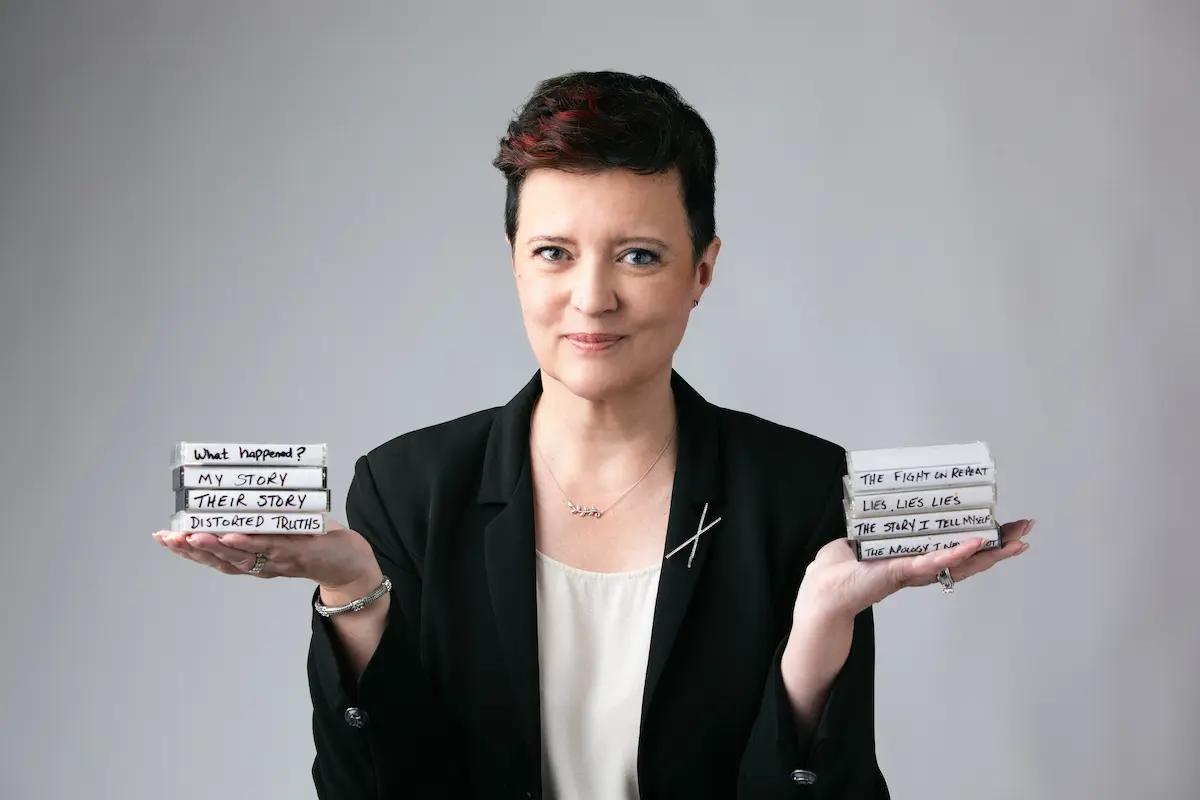

Vanessa is one of the coaches I trust most to carry my work forward. As a Certified PBT® Coach and Certified PBT® Support Group Host, she understands The Five Stages of Betrayal Recovery™ deeply and guides people through them with wisdom, warmth, and integrity. For those in Westchester County, New York, looking for an alternative to marriage counseling that addresses the betrayal at the root, I can't recommend her highly enough.
You keep talking about what happened. You are not getting any closer to feeling settled.
After infidelity, the questions can become relentless.
What else don't I know? Can I believe what I'm being told now? Why did this happen? Is contact really over? Why am I still reacting this strongly to something that happened months ago? Why does every conversation turn into another fight?
The partner who was betrayed may need truth, consistency, and time before reassurance begins to mean anything again.
The partner who caused the betrayal may want to make things right but not know how to respond without becoming defensive, shutting down, or trying to rush the conversation toward resolution.
Neither person can force trust back into the relationship.
After betrayal, you may both want answers. You may need very different things to feel steady enough to hear them.
If you were betrayed
You may be trying to understand what is true now.
Questions can come quickly and repeatedly. What happened? Is there more I don't know? Is contact really over? Can I believe what I'm being told? Why am I still reacting this strongly?
Asking for details is not always about punishment. Sometimes it is an attempt to rebuild a reliable picture of reality after something you believed about your relationship turned out not to be true.
You may need truth, consistency, clearer boundaries, and time to see whether your partner's actions begin to match their words.
You are not responsible for your partner's decision to betray the relationship. You are allowed to understand what happened before deciding what you are willing to do next.
If you caused the betrayal
You may want to make things better and feel as though nothing you say is enough.
You may answer the same question more than once. You may feel ashamed, defensive, frustrated, or afraid that every conversation will return to what happened. You may want your partner to see that you are trying now.
But reassurance cannot be rushed into becoming trust.
Your part is not to live in shame. It is to take responsibility for the choice you made, answer honestly, understand the impact of what happened, and become consistent enough that your partner no longer has to rely only on your promises.
If you are trying to understand what responsibility looks like beyond saying you're sorry, read Accountability After Betrayal .
Trust is rebuilt in what happens next.
An apology can matter. So can remorse. But neither can carry the entire weight of rebuilding.
Trust begins to change when truth becomes more reliable, behavior becomes more consistent, difficult conversations become less destructive, and the person who was betrayed no longer has to work so hard to determine what is real.
- Truth that does not keep changing
- Transparency that is offered, not constantly extracted
- Accountability without defensiveness or blame shifting
- Clearer communication when emotions are high
- Boundaries that protect the relationship
- Consistency long enough for words to mean something again
Communication after betrayal changes because the meaning underneath the words has changed.
One person asks a question looking for reassurance. The other hears accusation.
One person says, “I need a little space.” The other hears, “You are leaving me.”
One person explains what they meant. The other is reacting to what they heard.
This is where communication needs to become more intentional. We slow down what is actually being said, what is being inferred, where defensiveness enters, and what happens next.
Sometimes that means learning how to answer without immediately defending. Sometimes it means asking a direct question instead of trying to interpret what the other person must have meant. Sometimes it means recognizing when the conversation is no longer productive and knowing how to pause without abandoning it.
These changes help create the conditions for more honest conversations and a clearer view of what is actually happening between you.
Rebuilding does not mean going back to the relationship you had before.
The betrayal matters. So does understanding the relationship that existed before it.
There may have been disconnection, resentment, loneliness, communication problems, or a loss of physical and emotional closeness before the betrayal occurred.
Those things can be understood without making them the cause of someone else's decision to betray the relationship.
If you decide to stay together, the work is not restoring the old relationship. It is understanding what needs to be different now.
What would it take? Am I willing? Is my partner capable?
You do not need to answer those questions before we begin. The work helps you see them more clearly.
After trying several other therapists, including a very well known and expensive one in NYC, she was the first to truly make a difference. Her personalized approach and encouragement gave us hope. Vanessa lives by example, having worked through betrayal in her own marriage, and her experience and resilience gave us real hope.
I have lived through betrayal in my own marriage.
We are still married because both of us chose to understand what happened, take responsibility for what belonged to us, and rebuild differently.
That experience informs the way I work. It does not determine what you should choose.
I will not tell you that staying is the right answer or that leaving is the right answer. My role is to help you understand what is happening clearly enough to see what rebuilding would require and make decisions you can stand behind.
Lived experience informs my perspective. Training and years of direct work with individuals and couples give that perspective structure.
You do not need to know whether the relationship can be rebuilt before we talk.
The Foundation Session gives us 90 minutes to slow the situation down and understand what is actually happening.
I review your intake before we meet, so we are not starting cold. During our time together, we begin identifying what is keeping you stuck, what needs attention first, and what each of you is trying to understand.
Within 24 to 48 hours, you receive a personalized written recap that organizes what we discussed and gives us a clearer starting point for what comes next.
There is no predetermined package you need to commit to. What comes next is shaped by what we are learning together.
90 minutes
Intake reviewed beforehand
Personalized written recap
Peekskill + Virtual
Betrayal recovery and Relationship Reset coaching in Westchester County.
I work with individuals and couples from my office in Peekskill, serving Westchester County and the Hudson Valley, as well as clients virtually.
Some people come to me after trying couples therapy or marriage counseling and feeling as though they are still having the same conversations. Others are looking for a structured alternative to traditional marriage counseling that focuses directly on trust, communication, accountability, connection, and decision clarity.
I am a Relationship Reset Expert and Betrayal Recovery Specialist, not a psychotherapist or licensed marriage counselor. If you are deciding which kind of support makes sense for you, read Therapy vs. Relationship Coaching .
For clients in Manhattan looking for discreet, focused support after infidelity, learn more about Betrayal Recovery in NYC .
Frequently Asked Questions
You do not need to have everything figured out before you begin.
Trust can be rebuilt in some relationships, but it cannot be forced or guaranteed. Rebuilding usually requires truthful communication, accountability from the partner who caused the betrayal, consistency over time, clear boundaries, and a willingness to understand what the relationship would need to become different. Part of our work is seeing whether those conditions are actually present.
No. You do not need to decide whether you can forgive, stay, or rebuild before beginning the work. You can start by understanding what happened, what you need now, what has changed, and what remains uncertain.
No. The person who chose the betrayal is responsible for that choice. If the couple decides to explore rebuilding, there may also be relationship problems from before the betrayal that need attention. Understanding those problems is not the same as assigning responsibility for the betrayal to the partner who was hurt.
That uncertainty is something we can work with. You do not need to promise reconciliation in order to understand the relationship more clearly. We can look at what rebuilding would require, what you are seeing from your partner, what you need, and what would help you make a decision you can stand behind.
Yes. Individual relationship coaching can help you understand your own questions, boundaries, communication, triggers, and decisions even if your partner is not ready to participate. If your partner later chooses to join the work, we can determine what makes sense from there.
No. I provide Relationship Reset coaching and betrayal recovery support. I am not a psychotherapist or licensed marriage counselor. This work focuses on trust, communication, relational patterns, boundaries, accountability, connection, and decision clarity. Coaching and therapy serve different purposes, and some couples use both.
Within 24 to 48 hours, you receive a personalized written recap that organizes what we discussed and the areas that became important during our time together. Foundation gives us a starting point. From there, we may meet again together, spend time understanding each partner's perspective individually, or continue working with what has already begun to surface. What comes next is shaped by what we are learning about the relationship. There is direction to the work, but not a predetermined package or script.
You do not need to know the ending before you begin.
If betrayal has left you questioning what is true, whether trust can return, or what this relationship would actually need in order to continue, the Foundation Session gives us a place to start.
Explore the Foundation Session