Muscle Through It: Why Gen X Waits Too Long to Get Relationship Help
"We've been dealing with this for years."
I hear some version of that from Gen X couples all the time, and they usually don't say it dramatically. They say it almost matter-of-factly, as though living with the same problem for five or ten years is simply part of being married.
By then, they have usually made a lot of adjustments around whatever is not working. One person stopped bringing something up because the conversation never went anywhere. The other learned which subjects were better left alone. They kept raising children, building careers, caring for aging parents, managing the house and doing whatever needed to be done next.
Somewhere along the way, the relationship became another thing to manage.
That is something Gen X knows how to do very well.
We Learned How to Handle Things Ourselves
Many of us grew up with a level of independence that would probably make people uncomfortable now. We came home to empty houses, figured out dinner, entertained ourselves and learned how to solve problems without immediately looking for an adult to step in.
I was a latchkey kid. In a lot of ways, I basically raised myself.
There was good that came from that. I became capable, resourceful and independent. But independence can become something else when you get so used to handling things yourself that you no longer know when to reach for another person.
I see that in a lot of the Gen X clients I work with. They are not unwilling to look at themselves. Usually the opposite. They are thoughtful, adaptable and genuinely interested in understanding why they do what they do.
They also tend to arrive after they have already tried almost everything they know how to try on their own. They read the book. They had the conversation. They gave it time. They lowered the expectation. They decided maybe this was simply what marriage looked like after twenty or thirty years.
A lot of us learned how to survive without asking for very much.
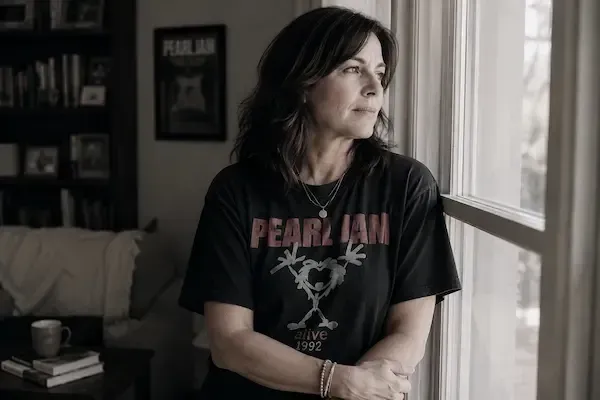
"I'm still alive."
For some people in this generation, that idea became more than a lyric. It became a way of functioning.
The Things We Learned Before We Had Words for Them
A lot of people are surprised when something happening in their marriage today leads us back to a much earlier experience. Not because every relationship problem comes from childhood. It doesn't. But what we learned early about closeness, conflict, need and disappointment tends to stay with us.
If emotional needs were rarely discussed in your family, you may have learned to take care of yourself before anyone had the chance to disappoint you. If conflict felt unpredictable, you may have learned how to read a room before speaking. If your parents divorced and nobody really talked about what was happening, you may have learned that relationships can change suddenly and the safest thing to do is adapt.
Those lessons can sit quietly for decades.
Then your partner gets upset and you shut down. You hear criticism and immediately defend yourself. Someone asks what you need and you genuinely don't know how to answer. Your spouse tells you they feel alone and your first thought is, But I've been here the whole time.
That is often where people get confused.
They have built successful lives, are competent at work, and have raised families and handled difficult things. So it can be unsettling to realize that one conversation with a spouse can still make them feel cornered, rejected, criticized or completely unsure of what to say.
Sometimes that reaction makes more sense when we stop looking only at the current argument and start looking at what the person learned long before this relationship began.
We Are Very Good at White-Knuckling It
By midlife, many Gen Xers are carrying an enormous amount. Children still need things. Parents begin needing more. Careers remain demanding. Finances become more complicated. Bodies change. Marriages that have run on momentum for years begin asking harder questions.
And most people just keep going.
I will sometimes ask someone what they have done with their own exhaustion, resentment or loneliness, and there is usually a pause before I hear something like, "I don't know," or "I just deal with it." Sometimes it is, "There hasn't really been time." And very often it is simply, "I'm fine."
They may not be fine, but rather...functioning.
There is a difference.
A lot of people reach midlife and realize they are tired in a way sleep is not fixing. They have spent years making sure everyone and everything keeps moving, and the relationship has often been doing the same thing.
The bills get paid. The house runs. People show up where they are supposed to show up. Dinner still happens. The calendar remains packed.
The relationship still looks normal, especially from across the street.
Inside it, two people may have been lonely for years.
When the Old Arrangement Stops Working
There is something happening in a number of long-term Gen X relationships that is difficult to miss. The arrangements people accepted for years are starting to feel less acceptable.
I see women who have carried much of the emotional and mental responsibility in their families asking themselves whether they want to continue doing it. Not whether they can. They already know they can.
The question is whether they want the next twenty years to look like the last twenty.
Some are not imagining another relationship. They are imagining what it might feel like not to carry this one in the same way anymore.
"She lies and says she's in love with him."
For a lot of women, waiting became part of the arrangement. Wait until the kids are older. Wait until work settles down. Wait until there is more money. Wait until things get easier. Wait until your partner finally understands how serious you are.
At some point, waiting stops feeling neutral.
At the same time, husbands who believed the marriage was basically fine can find themselves facing a partner who is no longer willing to live inside the old arrangement. From one side, it can feel sudden. From the other, it may have been building for years.
That difference in timing is part of what makes these conversations so difficult.
One person is reacting to a crisis that has just become visible. The other has been living with it for a long time.
Less Conflict Doesn't Always Mean Things Got Better
Gen X couples are often very skilled at creating workarounds.
They know what will start a fight, so they stop bringing it up. They know their partner gets defensive about money, so they handle more of it themselves. They know conversations about sex end badly, so they stop having them. Sometimes they stop having the conversation long before they stop having sex, and years later they call it a sexless marriage as though the sex disappeared on its own. They know asking for more emotional connection leads to the same discussion, so eventually they stop asking.
Over time, that can look like stability.
The arguments become less frequent. There is less tension at dinner. Nobody is slamming doors.
But sometimes that is not because the relationship improved. Sometimes two people simply became very efficient at avoiding the places where the relationship hurts and that can go on for a very long time.
Then one day someone says, "I can't keep doing this."
Their partner may be stunned because nothing significant happened that week. From their perspective, things were not great, but they were not terrible either.
Usually the problem did not begin that week. That was simply the week someone stopped editing themselves.
Why Gen X Often Waits So Long to Get Help
A lot of Gen Xers do not reach out when something first begins to feel wrong.
They troubleshoot, make adjustments, and explain things to themselves.
They decide maybe their expectations are too high. They try to be more patient. They tell themselves everyone goes through rough patches. They wait to see if things improve on their own.
Then they try again.
By the time they seek help, the original problem is often surrounded by years of adaptations.
That is why I am not only interested in what someone wants to change. I want to know what they have already changed in order to live with the relationship as it is.
What did you stop asking for?
What subject disappeared?
Where did you begin handling something alone because involving your partner became harder than doing it yourself?
What have you accepted because changing it felt impossible?
Those answers usually tell us much more than, "We need to communicate better."
They show us how the relationship has been functioning and what both people have had to do to keep it going.
You Don't Have to Know Whether You're Staying
Another reason people wait is because they believe getting help means they have already made a decision.
If we get help, maybe that means we are committing to stay. If I talk to someone, maybe I am admitting the marriage is failing. If I say how unhappy I really am, maybe I will not be able to take it back.
So they stay in the middle for a long time. They are not leaving, but they are not really rebuilding either. They are continuing.
You don't have to know the ending before you ask for help. Sometimes the question is whether the relationship can become something different. Sometimes the question is whether you still want to be in it.
Those are not the same question, and it is very hard to answer either one clearly when you are still trying to make sense of years of disappointment, resentment, distance, or uncertainty.
That is why clarity has to come first.
More Years Behind Us Than in Front of Us
There is something about midlife that changes the way certain questions land.
Twenty years no longer feels abstract because you have already lived twenty years. You know how quickly five years can disappear while you are waiting for something to change.
So the question is no longer only, Can we keep doing this?
You probably can. A lot of Gen Xers have proven they can endure quite a bit.
The harder question is whether this is how you want to live. Whether you still want to organize your relationship around the same silence, resentment, distance, or disappointment. Whether being able to tolerate something is the same as choosing it.
Did I say that I need you?
For people who learned early not to need very much from anyone, saying what you need inside a relationship can feel surprisingly vulnerable. So can admitting that what you have been doing is no longer working.
Maybe This Isn't Something You Have to Muscle Through
Maybe This Isn't Something You Have to Muscle Through
The coping strategies that got you here are not automatically the strategies that will take you forward.
Being self-reliant may have protected you. Keeping the peace may have helped your family function. Lowering expectations may have made disappointment easier to live with. Handling things yourself may have felt safer than asking again. There was probably a reason for all of it.
The part worth looking at now is what those adaptations are creating in your relationship today.
Pearl Jam's "Present Tense" has been sitting with us since 1996. I hear that song differently now than I did then. Maybe that's what happens when you have more years behind you than in front of you. You stop asking only whether you can live with something and start asking whether you want to.
You already know how to muscle through.
At some point, it becomes worth understanding what you have been muscling through.
Next Steps
If your relationship has been running on workarounds, distance, or conversations you stopped having years ago, explore Relationship Reset.
If you're not sure what needs to change or whether the relationship can become something different, schedule a Foundation Session.